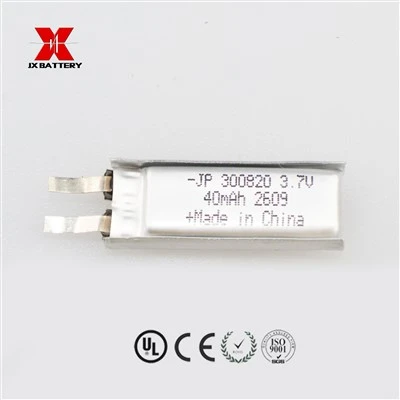

In order to prevent lithium battery overcharging, it is necessary to control the charging end point. When the battery is fully charged, some special information can be used to judge whether the charging has reached the end point. There are six ways to prevent the battery from being overcharged:
1. Peak voltage control: determine the end point of charging by detecting the peak voltage of the battery;
2.dT/dt control: determine the end point of charging by detecting the change rate of battery peak temperature;
3.T control: When the battery is fully charged, the difference between the temperature and the ambient temperature will reach the maximum;
4.-V control: when the battery is fully charged and reaches a peak voltage, the voltage will drop by a certain value;
5. Timing control: the charging end point is controlled by setting a certain charging time, which is generally controlled by setting the time required to charge 130% of the nominal capacity;
6.TCO control: Considering the safety and characteristics of lithium batteries, charging at high temperature (except high-temperature batteries) should be avoided. Therefore, charging should be stopped when the battery temperature rises by 60.