

Why Choose Us?
Professional Service
To get the trust and make customer rest assured, we have the service concept of Response in 24 hours (pre-sale), Solution in 72 hours (in sale) and Maintenance in 10 years (after-sale)!
Rich Experience
Established in January 2017, Jingxian Battery Technology Co.,Ltd is founded by senior battery experts and located at the beautiful city Shenzhen of China, who are specialized in the energy storage industry with independent R&D, production and sales on the Li-ion battery pack.
Wide Product Range
Combined with advanced manufacturing technology, professional R&D, and strong supply chain, our products are widely used in the industries of medical, communication, security and protection, finance, transportation, logistics, mine, photovoltaic, consumer electronics, etc.
One-stop Solution
We provide one-stop service from design, research, molding, production, assemble, testing and products solution from battery cell to finished products whole complete OEM and ODM. All products have passed CE, FCC, RoHS certification to satisfy customer's requirements.
Definition of Lithium UPS Battery
A Lithium UPS Battery, or uninterruptible power supply, is a device that protects IT equipment and other electrical loads from problems that plague our electricity supply. A lithium UPS achieves this using a Lithium UPS Battery instead of the more common valve-regulated lead-acid (VRLA) battery. Lithium-ion batteries have some significant advantages over conventional VRLA batteries.
-
![Three Phase UPS]() Three Phase UPSThree-phase UPS, also known as a three-phase uninterruptible power supply, is a type of power protection solution used in various industries to ensure continuous power supply. It works by converting the AC input power into a DC power...view more
Three Phase UPSThree-phase UPS, also known as a three-phase uninterruptible power supply, is a type of power protection solution used in various industries to ensure continuous power supply. It works by converting the AC input power into a DC power...view more -
![Double Batteries UPS]() Double Batteries UPSDouble batteries UPS is a form of uninterruptible power supply that provides extra battery life for extended backup power. It is a popular solution for people who need constant power supply without experiencing any downtime.view more
Double Batteries UPSDouble batteries UPS is a form of uninterruptible power supply that provides extra battery life for extended backup power. It is a popular solution for people who need constant power supply without experiencing any downtime.view more -
![Ups Online1000w]() Ups Online1000wUps online 1000w is a powerful UPS (Uninterruptible Power Supply) device designed to provide backup power to critical electronic equipment during power outages. It is an ideal solution for businesses and institutions that cannot afford...view more
Ups Online1000wUps online 1000w is a powerful UPS (Uninterruptible Power Supply) device designed to provide backup power to critical electronic equipment during power outages. It is an ideal solution for businesses and institutions that cannot afford...view more -
![3kVA 240VAC Online UPS]() 3kVA 240VAC Online UPSThe 3kVA/240VAC Online UPS is a high-performance, reliable, and efficient uninterruptible power supply that provides clean and stable power for critical loads, such as servers, data centers, networking equipment, medical equipment, and...view more
3kVA 240VAC Online UPSThe 3kVA/240VAC Online UPS is a high-performance, reliable, and efficient uninterruptible power supply that provides clean and stable power for critical loads, such as servers, data centers, networking equipment, medical equipment, and...view more -
![1kVA 120vac Online UPS]() 1kVA 120vac Online UPSA 1kVA 120vac online UPS is an uninterruptible power supply that provides continuous power backup to critical electronic devices during power outages or fluctuations. It is capable of handling power load up to 1kVA and providing clean...view more
1kVA 120vac Online UPSA 1kVA 120vac online UPS is an uninterruptible power supply that provides continuous power backup to critical electronic devices during power outages or fluctuations. It is capable of handling power load up to 1kVA and providing clean...view more -
![Online Long Backup 2kva UPS]() Online Long Backup 2kva UPSOnline Long Backup 2kva UPS is an uninterrupted power supply system that is designed to provide continuous and reliable power to critical equipment and devices during power outages or fluctuations.view more
Online Long Backup 2kva UPSOnline Long Backup 2kva UPS is an uninterrupted power supply system that is designed to provide continuous and reliable power to critical equipment and devices during power outages or fluctuations.view more -
![Rackmount 3kVA UPS]() Rackmount 3kVA UPSRackmount 3kVA UPS is a reliable and space-saving solution for critical electronic equipment in data centers and IT environments.view more
Rackmount 3kVA UPSRackmount 3kVA UPS is a reliable and space-saving solution for critical electronic equipment in data centers and IT environments.view more -
![Rackmount 220V UPS]() Rackmount 220V UPSRackmount 220V UPS (Uninterruptible Power Supply) is a device that provides power backup during power outages or fluctuations.view more
Rackmount 220V UPSRackmount 220V UPS (Uninterruptible Power Supply) is a device that provides power backup during power outages or fluctuations.view more -
![Rack mount 6000VA UPS]() Rack mount 6000VA UPSA Rackmount 6000VA UPS (Uninterruptible Power Supply) is a device designed to provide an uninterrupted power supply to critical electronic equipment during power outages or fluctuations. This type of UPS is mounted on a rack, making it...view more
Rack mount 6000VA UPSA Rackmount 6000VA UPS (Uninterruptible Power Supply) is a device designed to provide an uninterrupted power supply to critical electronic equipment during power outages or fluctuations. This type of UPS is mounted on a rack, making it...view more -
![3 Phase UPS Rackmount]() 3 Phase UPS Rackmount3-Phase UPS Rackmount is a type of uninterruptible power supply that provides power protection for high-density server racks and data centers. It is specifically designed to meet the needs of commercial and industrial applications that...view more
3 Phase UPS Rackmount3-Phase UPS Rackmount is a type of uninterruptible power supply that provides power protection for high-density server racks and data centers. It is specifically designed to meet the needs of commercial and industrial applications that...view more -
![One Phase UPS 6kVA]() One Phase UPS 6kVAOne Phase UPS 6kVA is a highly efficient single-phase uninterruptible power supply system that is designed to provide power protection in various applications. This UPS system is versatile, reliable and highly effective in safeguarding...view more
One Phase UPS 6kVAOne Phase UPS 6kVA is a highly efficient single-phase uninterruptible power supply system that is designed to provide power protection in various applications. This UPS system is versatile, reliable and highly effective in safeguarding...view more -
![Rackmount 3kVA UPS]() Rackmount 3kVA UPSA Rackmount 3kVA UPS (Uninterruptible Power Supply) is a device that provides critical protection to servers, routers, switches, and other IT equipment that are essential for running modern-day businesses. The Rackmount 3kVA UPS is...view more
Rackmount 3kVA UPSA Rackmount 3kVA UPS (Uninterruptible Power Supply) is a device that provides critical protection to servers, routers, switches, and other IT equipment that are essential for running modern-day businesses. The Rackmount 3kVA UPS is...view more


6 Key Benefits of Using Lithium UPS Battery
More Compact and Lightweight
Lithium UPS Battery weigh 40% to 60% lighter and have a 40% smaller footprint than their VRLA counterparts. This translates into a remarkable power density level, where less space is needed to deliver the same amount of power.
Lasts Longer
Lithium UPS Battery have a significantly longer lifespan--around twice or thrice that of VRLA batteries on average. Compared to a traditional VRLA battery technology that typically lasts three to five years, lithium-ion technology can provide a battery service life of eight to ten years (or longer), often outlasting the UPS itself. This essentially makes the UPS almost maintenance-free with fewer or possibly no battery replacements throughout its lifespan. Unlike VRLA batteries, lithium-ion batteries offer a high life cycle, making it suitable for many applications where frequent charge and discharge cycles are expected.
Contributes to a Lower Total Cost of Ownership
Regarding the total cost of ownership (TCO), lithium-ion batteries can provide up to 50% savings over their life expectancy. This is primarily due to their longer lifespan, high-temperature resilience, reduced maintenance expenses (with fewer or no battery replacement), and reduced installation expenses. Although VRLA batteries can surely save you money upfront, think of the bigger picture and consider the TCO.
Faster to Recharge
Lithium UPS Battery need to be recharged as quickly as possible to full capacity. While VRLA batteries can take over 6 hours to charge from 0% to 90% of full runtime capacity, lithium-ion batteries take only around 2 hours to recharge. That reduces the overall risk of experiencing an outage before your UPS batteries have been fully charged.
The cutting-edge lithium-ion battery technology has gone a long way to the advantage of many industries. With the many benefits it offers, a lithium-ion powered UPS is a must-have to secure your critical operations and lessen your operational costs.
Resilient to Higher Temperatures
Lithium UPS Battery can operate normally at temperatures of up to 40ºC without compromising performance. This is a clear advantage of this battery technology over VRLA batteries, which shed off about half their lifespan for every 10ºC temperature rise over 25ºC.
Since lithium-ion batteries have a wide operating temperature range, they become convenient for more extreme, non-traditional settings and facilities that don't have enough cooling capabilities.
Comes With Advanced Integrated Battery Management System
Lithium UPS Battery come with an advanced integrated battery management system (BMS). This provides an accurate picture of the battery's health and runtime and protects the battery cells against current, temperature, and over- or under-charging. The BMS continuously adjusts battery charging to make the most out of performance and battery life.

● Disconnect Batteries
Disconnect your batteries in your equipment when not in use. Disconnecting your batteries will eliminate any parasitic loads that may drain your batteries down while in storage. Batteries left in a discharged state are subject to sulfation which may reduce life and/or permanently damage them.
● Keep Fully Charged
This step is absolutely critical! Always store your batteries FULLY CHARGED. Batteries have a self-discharge rate and need to be maintained while stored. Prior to disconnecting your batteries, make sure they are fully charged. Every other month, connect your batteries, plug in the charger, and run your batteries through a full charge cycle.
● Monitor Temperature
Extreme hot and cold weather can affect your batteries. High Temperatures will accelerate chemical activity in your Lithium UPS Battery significantly during storage. This will increase the self-discharge rate, potentially causing a reduction in capacity and/or shorter battery life. Cold Temperatures conversely will cause slower activity, which may make a battery vulnerable to freezing if not kept fully charged. For example, if you know your garage exceeds 100 degrees during the summer, or gets below 35 degrees in the winter, you should bring them inside your home where they can be insulated.
Guidance on Shipping Lithium UPS Battery Power Banks
The IATA Dangerous Goods Regulations and supplemental IATA Lithium Battery Guidance clarify that battery packs, modules or battery assemblies, often known as power banks or portable chargers, are regulated as lithium ion batteries (UN3480). Such shipments are subject to the UPS requirement that, when shipped by air, all lithium ion and metal batteries must be shipped as fully regulated dangerous goods, which requires a UPS Dangerous Goods contract.
Classification questions related to a specific product should be directed to the appropriate national authority in the country from or within which a shipper wishes to send lithium batteries.
The life of a UPS lithium battery, like any rechargeable battery, is influenced by various factors. The lifespan of a UPS lithium battery is typically measured in terms of the number of charge-discharge cycles it can undergo before its capacity significantly diminishes. Several factors can affect the life of a UPS lithium battery.
A well-maintained lithium battery in a UPS system can last between 8 to 10 years. However, this is a general estimate, and the actual lifespan can vary based on the factors mentioned above. Monitoring the battery's health, observing any signs of deterioration, and replacing it when necessary are essential practices to ensure the continued reliability of the UPS system.
10 Signs It's Time for a Lithium UPS Battery Replacement
Network uptime is critical for your business. An essential component of assuring your technology uptime is the UPS. These devices can often be forgotten as they have long lifespans and generally sit at the bottom of the tech rack. However, if neglected, these devices can be the Achilles Heel in your disaster prevention systems and redundancy planning. Below are 10 signs that it's time to replace your Lithium UPS Battery:
1. It's been 3 to 5 years since the purchase date
While a UPS lifecycle can extend to 10+ years, the life cycle of many batteries is 3 to 5 years. It is best to consider a battery replacement in the 3-to-5-year range depending on the critical nature of the systems that the UPS is supporting. A best practice is to replace the UPS unit itself when the second battery replacement is ready, generally 6 to 10 years from date of purchase for on line and line interactive units. The last thing you want in a critical power failure event is for the battery to go offline because the batteries were past their life-cycle expectancy—an error you could have prevented. Contact us if the lifespan of your UPS is coming up and you want to know your replacement options.
2. The UPS is beeping or displaying caution lights
A tell-tell sign that a UPS battery is about to fail is the existence of a sharp beeping sound coming from the UPS or amber caution lights or symbols displaying on the unit's digital display. If either of these exist, testing should be done immediately and if appropriate, the batteries replaced. If the codes do not indicate a battery failure, contact us for assistance in diagnosing, repairing, or replacing the unit.
3. The battery life is shorter than advertised
If the battery is losing power or not living up to expectations from the manufacturer's declared lifespan or capacity, the battery may need to be replaced or was faulty from the start. Many factors can shorten a battery's lifecycle, including material defects, temperature variability, humidity, as well as many other environmental causes. In your testing cycles, if the battery is not performing within expected parameters, it may be time to replace the battery.
4. You notice the chassis bulging or other chassis damage
As older lead-acid batteries age, they can tend to bulge overtime which can distort the chassis. Anytime you experience leaking, discoloration caused by heat or acid, you should immediately replace the batteries from that unit. Left unattended, the acid leakage could destroy other essential systems or in a worst-case scenario, the battery could explode and combust causing potential catastrophic results.
5. Systems go offline during a power outage
Obviously, if the power goes out and the UPS system fails to keep your systems online, the battery should be inspected and replaced. This assumes the devices that went offline were correctly plugged into the UPS or PDU attached to the UPS. Ideally, this would never happen if you are using a regular preventive maintenance program to monitor UPS health.
6. Preventive maintenance visits have been skipped
A potential sign that it's time to replace your UPS battery is if you haven't been performing routine preventive maintenance on the units. Be sure to test those units as soon as you're able to verify they are performing as expected. Routine maintenance can prevent a host of potential issues and assure that your UPS will be there to protect your equipment when it is needed the most. We provide this service. Contact us to schedule a maintenance visit today.
7. Batteries perform strangely or give bad voltage readings
During your maintenance cycles and disaster preparedness testing, if the UPS renders inconsistent voltage readings or behaves in unexpected ways, be sure to verify the battery is not the culprit. Battery testing will yield impedance or resistance readings in addition to voltage readings when tested by a technician. Most UPS systems will not self-test for impedance and resistance so be sure to include this in your testing cycles. Alber Battery Monitoring can assist in assuring your UPS battery is running optimally when the time counts the most.
8. The UPS is located in a warm environment
Heat can drastically reduce battery life. An extended period of temperatures above 80 degrees Fahrenheit can greatly shorten battery life as well as your overall technology equipment life spans. If the location where your UPS equipment resides is consistently above 80 degrees, we recommend implementing thermal management and cooling equipment as soon as possible. Additionally, perform a battery test or request a preventive maintenance visit from one of our service technicians to assure the battery life has not diminished. Don't rely on the 3-to-5 year expected battery lifespan from a UPS operating in a warm facility.
9. Battery run time or load capacity is inadequate
Similar to overloading the intended power ports on the device due to technology growth, it also is possible to overextend the UPS load capacity. This happens when the power consumption needs of new or additional systems drawing power from the UPS in the rack are too demanding. Be sure to check your power consumption in relation to your uptime requirements and adjust your UPS or battery types to fit your needs. In the event that you are using two UPS units for redundancy or if you're powering your equipment from both “house” power and UPS power, be sure to use Monitored or Metered PDU's to avoid overloading the UPS when the power fails.
10. Energy savings and environmental sustainability
A bonus tip has to do with the advent of the new Lithium-based batteries. If you are still using lead-acid based units, replace them with Lithium to help the environment, improve your sustainability and carbon footprint as well as receive higher uptimes, longer lasting battery life and a higher return on your investment. Learn more about our Lithium-based batteries here. Modern UPS systems and Lithium batteries are game changers for power protection in your data center or network closet.
Is it Worth it to Replace Lithium UPS Battery?
A power outage can be a real nightmare, especially when you're in the middle of something important. That's why having an uninterruptible power supply (UPS) is essential to keep your devices running even when the power goes out. But over time, UPS batteries lose their ability to hold a charge and need to be replaced. The age of your UPS is an important factor to consider when deciding whether to replace the battery or purchase a new UPS. If your UPS is over five years old, it may be time to invest in a new one. Older UPS models may not be as efficient or reliable as newer models and may not provide adequate protection for your devices during a power outage.
Another factor to consider is the capacity of your UPS. If the capacity of your UPS is insufficient for your current needs, it may be time to invest in a larger UPS. Simply replacing the battery may not solve the issue, and your devices may still be at risk of damage during a power outage. If you experience frequent power outages, simply replacing the UPS battery may not be the best solution. A new UPS with a higher capacity may be a better investment to ensure that your devices are protected during prolonged outages. If your UPS is displaying battery replacement warning signs, it's important to take them seriously. These warning signs may include audible alarms, flashing lights, or error messages on your devices. If you continue to ignore these warning signs, your UPS may not provide adequate protection during a power outage.
Our Factory
Shenzhen Jingxian Battery Technology Co.,Ltd Established in 2017, engaged in the research, development, production and sale of all kinds of batteries, For example, Small-scale cells, Solar battery, Portable Power Station battery, Powerwall, Lithium UPS Battery, Industrial Battery, etc. We provide one-stop service from design, research, molding, production, assemble, testing and products solution from battery cell to finished products whole complete OEM and ODM. All products have passed CE, FCC, RoHS certification to satisfy customer's requirements. Our main products are various of solar generator, solar panel. We warmly welcome OEM and ODM orders. We work hard to provide the best quality products and efficient after-sale service for our customers. We have warehouse in USA, Canada, Russia, Germany, Philippines, Malaysia Which can reduce your inventory pressure and improve service efficiency. So we can give you best dropping shipping service.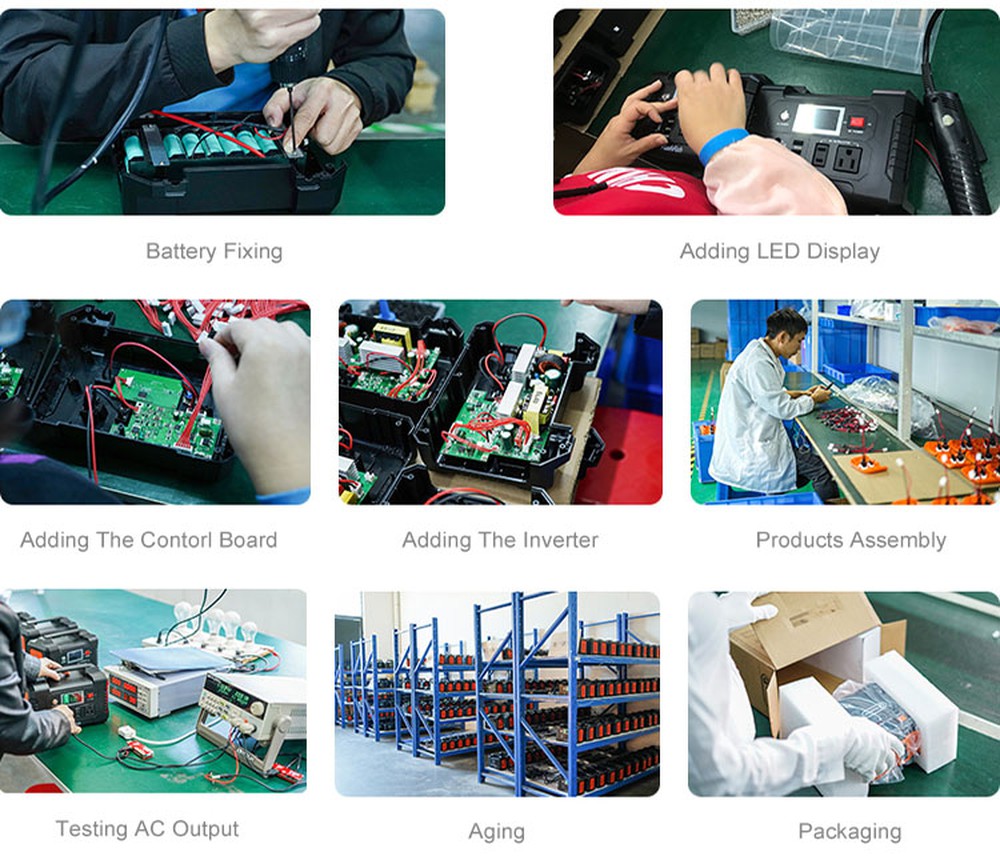
Product Packaging

Our Certificate

Ultimate FAQ Guide to Lithium UPS Battery
Shenzhen Jingxian Battery Technology Co., Ltd. is one of the most professional lithium ups battery manufacturers and suppliers in China, featured by quality products and low price. Please rest assured to wholesale long life lithium ups battery for sale here and get pricelist from our factory. For more cheap products, contact us now.