

Globally renowned lithium polymer battery company-JXBT
Lithium Polymer Battery (Li-Polymer Battery), as a significant branch of lithium-ion battery technology, has become a key energy solution for portable electronic devices, electric vehicles (EVs), and energy storage systems, thanks to its unique electrolyte system and structural design. This article will systematically analyze the key knowledge points in this specialized field from the perspectives of technical principles, core advantages, application scenarios, and future trends.

active members
years experience
events & challenges
expert instructors
I. Technical Principles and Structural Innovations
1. Breakthrough in Electrolyte System
The core innovation of lithium polymer batteries lies in the adoption of solid or gel-state polymer electrolytes (SPE/GPE), replacing the traditional liquid organic electrolytes used in lithium-ion batteries. This electrolyte forms a three-dimensional ion-conducting network through the combination of polymer matrices (such as polyethylene oxide, PEO) and lithium salts, significantly enhancing ionic conductivity (reaching up to 10^-3 S/cm at room temperature). Its advantages include:
Enhanced Safety: Solid electrolytes eliminate the risk of leakage and are less prone to thermal runaway under overcharging or short-circuit conditions.
Improved Interface Stability: The polymer matrix forms a more stable solid-solid interface with electrode materials, inhibiting the continuous growth of the Solid Electrolyte Interphase (SEI) film, thereby extending the battery's cycle life.
2. Flexibility in Structural Design
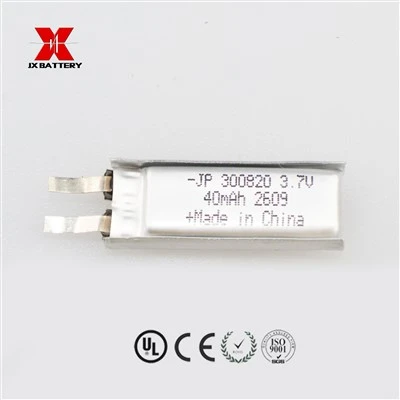
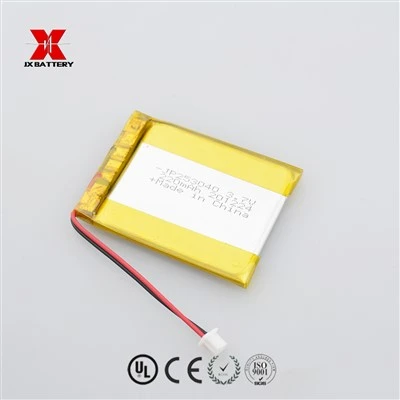
Lithium polymer batteries utilize aluminum-plastic film soft packaging (PP/Al/nylon composite structure), offering the following characteristics compared to steel or aluminum hard-shell packaging:
Lightweight and Thin-Profile: Reduces weight by 20%-40%, with thickness compressible to below 0.5mm, supporting ultra-thin and flexible designs (e.g., bendable batteries).
Pressure Release Mechanism: Releases internal gas pressure through uniform deformation, avoiding explosive rupture and significantly improving safety compared to traditional batteries.
II. Core Performance Advantages
1. Energy Density and Lightweight Design
High Energy Density: Optimizes space utilization through stacking processes, achieving higher energy storage per unit volume in portable devices to meet long-endurance demands.
Lightweight Design: The combination of polymer electrolytes and soft packaging significantly reduces battery weight, making it particularly suitable for drones, wearables, and other weight-sensitive applications.
2. Safety and Environmental Adaptability
High-Temperature Stability: Solid electrolytes are less volatile or decomposable at high temperatures, effectively suppressing thermal runaway risks.
Low-Temperature Performance Optimization: Gel electrolytes, enhanced with nano-fillers, maintain high ionic conductivity at -20°C, improving low-temperature endurance.
3. Environmental Friendliness and Cycle Life
Pollution-Free Materials: Free from heavy metals like lead and cadmium, aligning with green energy trends.
Long Cycle Life: Stable solid-solid interfaces reduce structural degradation of electrode materials, enabling over 500 cycles, significantly outperforming traditional batteries.
III. Typical Application Scenarios
1. Portable Electronic Devices
Smartphones and Tablets: Ultra-thin design supports lightweight devices, while high energy density meets all-day battery life demands.
Laptops: Lightweight and high safety make it the preferred power solution for high-end business laptops.
2. Electric Vehicles and Energy Storage Systems
Electric Vehicles: High energy density extends driving range, and soft packaging optimizes battery pack space, aiding vehicle lightweighting.
Renewable Energy Storage: Used in solar and wind energy systems, its long cycle life and high safety reduce maintenance costs.
3. Emerging Fields
Medical Devices: Such as miniature power sources for implantable medical instruments, relying on biocompatibility and stability.
Wearable Devices: Flexible batteries support curved screen designs, driving innovation in wearable device form factors.
IV. Industry Challenges and Future Trends
1. Current Technical Bottlenecks
Higher Costs: Polymer electrolytes and precision manufacturing processes result in significantly higher production costs than traditional batteries.
Temperature Sensitivity: Performance degrades noticeably under extreme temperatures, requiring material modifications (e.g., adding ionic liquids) to improve adaptability.
Charging Rate Limitations: The ionic conductivity of solid electrolytes remains lower than that of liquid electrolytes, necessitating further breakthroughs in fast-charging technology.
2. Future Technological Directions
Solid Electrolyte Optimization: Developing high-ionic-conductivity polymers (e.g., PEO-based composite electrolytes) to enhance room-temperature performance.
Flexible Battery Innovation: Combining stretchable electrode materials to support foldable devices and bioelectronic applications.
Recycling Technology Upgrades: Developing efficient recycling processes tailored to polymer electrolyte characteristics to reduce environmental impact.
Conclusion
Lithium polymer batteries, with their technological uniqueness, hold a significant position in the energy storage sector. Advances in materials science and manufacturing processes will further amplify their advantages in safety, lightweighting, and environmental friendliness, driving the sustainable development of industries such as new energy vehicles and smart devices. In the future, the industry must focus on cost control and performance optimization to unlock their potential in the global energy transition