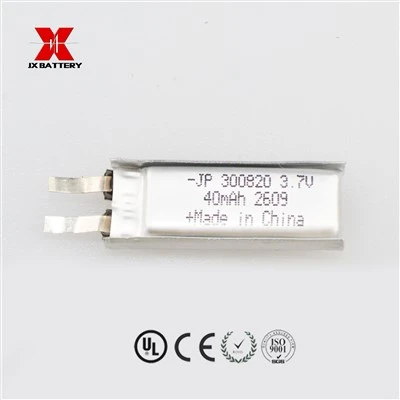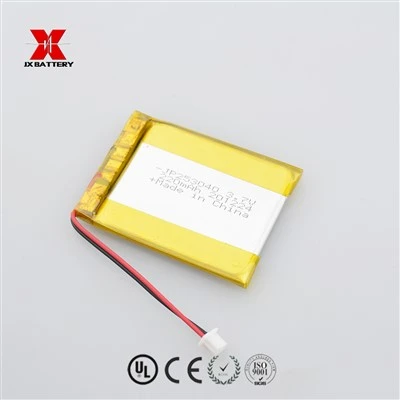


Safety certificates for global battery imports are based on UN38.3 (Transportation), supplemented by mandatory national/regional safety certifications in target markets. Authoritative requirements for major global markets (as of 2026) are as follows:
I. Global Universal: Mandatory Transport Certificates (Required for All Countries)
1. UN 38.3 Certification (Transport Safety)
Applicable to: All lithium batteries (lithium-ion, lithium metal, lithium-polymer)
Core Tests: Altitude simulation, thermal test, vibration, impact, short circuit, overcharge, forced discharge, and 5 other tests (total 8 items)
Required Documents:
UN 38.3 Test Report
MSDS (Material Safety Data Sheet)
Air/Sea Freight Identification Certificate (Cargo Transport Condition Identification)
Purpose: Mandatory pass for global air/sea/land transportation; cross-border shipment is prohibited without it.
2. IEC 62133 (International Basic Safety Standard)
International safety benchmark for portable secondary batteries (lithium/Ni-MH)
Tests: Overcharge, short circuit, crush, nail penetration, temperature cycling, vibration, drop
Technical core basis for CE, PSE, KC and other national certifications.
3. CB Certification (IECEE Mutual Recognition System)
One test, mutually recognized by 54 countries worldwide
Can be quickly converted to: CCC, CE, PSE, KC, BSMI, etc.
Ideal for multi-market exports, greatly reducing repeated testing.
II. Major Countries/Regions: Mandatory Import Safety Certificates
1. European Union (27 Member States + UK)
CE Certification (Mandatory)
Directives: LVD (Safety) + EMC (Electromagnetic Compatibility) + RoHS (Environmental Protection)
Standard: EN 62133 (equivalent to IEC 62133)
New Battery Regulation (EU) 2023/1542 (Mandatory since 2024)
Carbon footprint declaration required for batteries ≥2kWh
QR code traceability and recycling labels affixed
REACH Registration (Substances of Very High Concern, SVHC)
2. United States
FCC Certification (Mandatory): Electromagnetic Compatibility (EMC)
UL Certification (Market Mandatory)
Lithium battery cells: UL 1642
Battery packs/power banks: UL 2054
Required for listing on Amazon/Walmart
California Proposition 65 (Environmental, warning for lead/cadmium)
3. China
CCC Certification (Mandatory)
Applicable to: portable lithium batteries, power banks, energy storage power supplies
Standard: GB 31241 (equivalent to IEC 62133)
CQC Certification (for e-bike, drone batteries, etc.)
4. Japan
PSE Circular Certification (Mandatory)
Applicable to: lithium batteries with energy density ≥400Wh/L
Standard: JIS C 8712
METI Filing (importer declaration to the Ministry of Economy, Trade and Industry)
5. South Korea
KC Certification (Mandatory)
Standard: KC 62133 (equivalent to IEC 62133)
Testing required by local Korean laboratories
6. Other Major Markets
Australia/New Zealand: RCM + AS/NZS 62133
India: BIS Certification
Canada: IC Certification + UL/CSA
Brazil: INMETRO
Saudi Arabia: SASO (SABER)
Russia/Eurasia: EAC Certification (TR CU)
III. Lithium Battery Import Certificate Combinations (Quick Reference)
Global Universal: UN38.3 + MSDS + Transport Identification Certificate
Export to EU: CE (EN 62133 + RoHS) + UN38.3
Export to US: UL 1642/2054 + FCC + UN38.3
Export to China: CCC (GB 31241) + UN38.3
Export to Japan: PSE + METI + UN38.3
Export to South Korea: KC + UN38.3
IV. Key Processing Points
Laboratory Qualification: Must be ISO/IEC 17025 accredited
Certification Cycle:
UN38.3: approx. 1–2 weeks
CE/UL/KC: approx. 3–6 weeks
PSE/METI: approx. 5–6 weeks
Label Requirements:
EU: Recycling crossed-out bin symbol, CE mark
China: CCC mark, Chinese warnings
US: UL mark, warning statements
V. Common Reasons for Customs Clearance Failure
Missing UN38.3 or MSDS
Invalid/expired CE/UL/KC/PSE certificates
Missing or non-compliant labels
Battery type inconsistent with certification scope (e.g., power vs. consumer batteries)
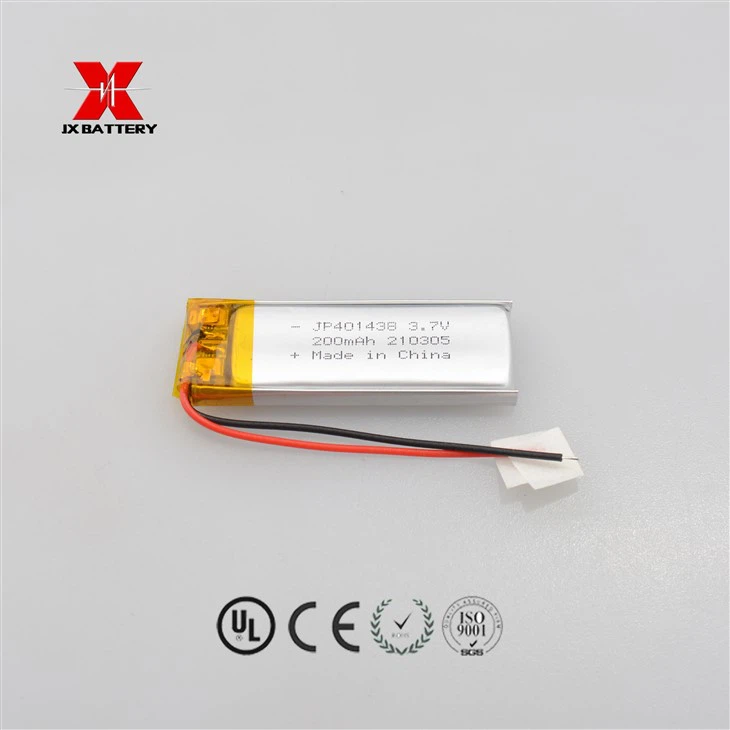
Globally renowned lithium polymer battery company-JXBT