

Which Battery Cell is Best for Power Banks?
A Comprehensive Comparison of 18650, Polymer, and Lithium Iron Phosphate Cells:

I. Technical Architecture Analysis: The Chemical Code of Battery Cells
1.1 18650 Lithium-ion Battery: The Art of Cylindrical Energy Packaging
Named after its cylindrical shape (18mm diameter, 65mm length), the 18650 cell uses a winding process to stack the positive electrode (e.g., lithium cobalt oxide), negative electrode (graphite), separator, and electrolyte (LiPF6) into a compact energy package. Its 3.7V nominal voltage stems from lithium-ion intercalation in layered structures, achieving an energy density of 250Wh/kg and maximizing space utilization in cylindrical designs.
1.2 Polymer Lithium-ion Battery: The Innovation of Flexible Lamination
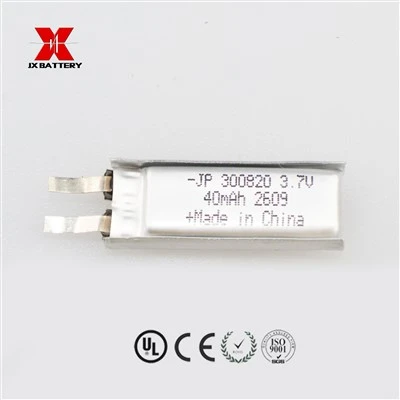
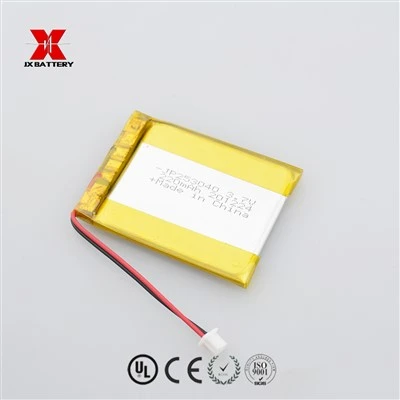
Adopting a stacking process, polymer cells replace liquid electrolytes with solid polymer electrolytes, breaking traditional form constraints. Positive electrodes (e.g., nickel cobalt manganese ternary lithium) and negative electrodes (graphite) form flexible laminated structures via high-molecular binders, with thicknesses compressible to below 0.3mm, enabling arbitrary shape customization. Gel electrolytes enhance safety while reducing internal resistance by 20%, improving charge-discharge efficiency.
1.3 Lithium Iron Phosphate Battery: The Stable Path of Olivine Structure
Using lithium iron phosphate (LiFePO4) as the positive electrode, the unique olivine crystal structure provides excellent thermal stability. Carbon coating enhances electronic conductivity, and nano-particle technology maintains 85% capacity at -20°C. Although its 3.2V nominal voltage is lower, optimized charge-discharge curves achieve over 95% Coulombic efficiency.
II. Performance Parameter Comparison: Decoding Laboratory Data
2.1 Energy Density Competition
| Cell type | Mass Energy Density (Wh/kg) | Volumetric Energy Density (Wh/L) |
| 18650 | 240-260 | 600-650 |
| Lipo battery | 220-240 | 550-600 |
| LiFePo4 battery | 150-160 | 400-450 |
(Data based on single-cell tests; actual products may vary due to shells and circuits)
2.2 Cycle Life Tests
At 25°C with 0.5C charge-discharge rates:
18650: 80% capacity retention after 500-800 cycles
Polymer: 80% capacity retention after 600-1000 cycles
Lithium Iron Phosphate: 85% capacity retention after 2000-3000 cycles
III. Safety Mechanism Analysis: Risk Control Matrix
3.1 Overcharge Protection
18650: Relies on protection boards (typically 4.2V±0.05V cutoff), with some high-end models using PTC self-recovery fuses.
Polymer: Uses CID current cutoff devices that automatically disconnect circuits when pressure exceeds thresholds.
Lithium Iron Phosphate: Chemically resistant to overcharging, with higher redundancy in protection board designs.
3.2 Thermal Runaway Prevention
18650: Separators melt at 130°C (closed-pore technology), combined with explosion-proof valves.
Polymer: Gel electrolytes slow heat diffusion, and aluminum-plastic packaging adapts better to thermal expansion.
Lithium Iron Phosphate: Olivine structures decompose above 500°C, far exceeding other cells.
IV. Market Application Map: Scenario-Based Solutions
4.1 Consumer Electronics
18650: Common in high-capacity power banks (>20000mAh), offering cost-effectiveness.
Polymer: Dominates the slim market (<10000mAh), supporting fast-charging protocols.
Lithium Iron Phosphate: Emerging in outdoor power sources (>100Wh), e.g., EcoFlow RIVER series.
4.2 Industrial Applications
Medical: Lithium iron phosphate cells power portable glucose meters and micro-pumps.
Aviation: 18650 cells meet UN38.3 certification for aircraft backup power.
IoT: Polymer cells' small size suits smart sensors.
4.3 Special Environment Applications
Extreme Cold: Lithium iron phosphate cells retain 60% capacity at -30°C.
High Temperature: Polymer cells maintain 15% higher capacity than 18650 cells at 60°C.
High Vibration: 18650's steel shells outperform polymer cells in vibration resistance.
V. Environmental Impact Assessment: Full-Life-Cycle Carbon Footprint
5.1 Production Process
18650: Cobalt mining raises ethical concerns, but recycling is mature.
Polymer: High energy consumption in aluminum and copper foil production.
Lithium Iron Phosphate: Cobalt-free design with abundant phosphorus and iron resources.
5.2 Recycling and Disposal
18650: 95% recycling rate, primarily for cobalt and nickel extraction.
Polymer: Complex recycling, mainly recovering copper and aluminum.
Lithium Iron Phosphate: High potential for secondary use in energy storage stations.
VI. Future Technology Trends: Next-Generation Battery Cells
6.1 Material Innovations
Silicon-Carbon Anodes: Increase 18650 capacity by 30%, but face volume expansion issues.
Solid-State Electrolytes: Polymer cells may eliminate leakage risks, achieving energy densities over 300Wh/kg.
Lithium Metal Anodes: Lab-stage lithium iron phosphate cells reach 400Wh/kg.
6.2 Form Factor Evolution
Irregular Batteries: Polymer cells will support curved shapes for wearables.
Structural Batteries: 18650 cell packs will improve space utilization via CTP technology.
Conclusion:
The evolution of battery cell technology is a fusion of materials science, electrochemistry, and electronic engineering. Within the compact space of power banks, these three cell technologies each excel, offering consumers diverse choices from basic endurance to professional protection. The future battery market will inevitably move toward higher energy densities, stronger environmental adaptability, and better cost-efficiency. For consumers, understanding their needs and selecting matching cell technologies will truly make power banks "energy partners" for mobile life.
Globally renowned lithium polymer battery company-JXBT