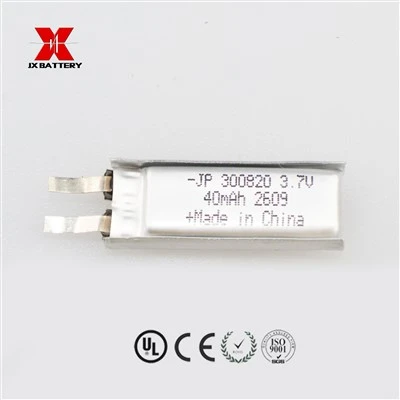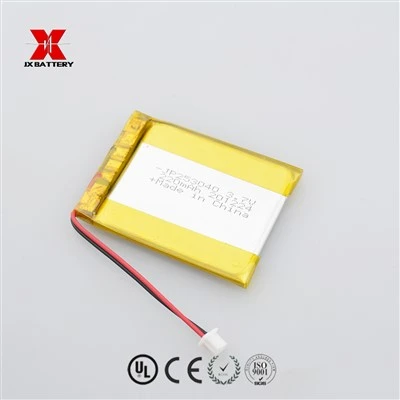


A customer called me in March. He runs a brand selling power banks and handheld instruments, and he needed a 3.7v 10000mah lipo battery for the next production run. Two quotes sat on his desk. One priced the pack at a number that looked great on paper. The other ran 18% higher but kept talking about PCM, cell size, and discharge current instead of price. He almost signed the cheaper one. Then he asked me to look at the specs. The cheap pack had a bare 10000mAh cell, no PCB, a 0.5C discharge rating, and a nine-week lead time. The expensive one had a protection circuit, a 2C rating, and samples in his hands within three weeks. Same capacity on the label. Completely different batteries underneath. That's a 3.7v 10000mah lipo battery in real life. Two cells that look identical and behave nothing alike.
I see this exact story every month. Buyers usually find out the difference after the first bad batch. So here's what I look at with every client before they commit to a 3.7v 10000mah lipo battery supplier.
Why 3.7V LiPo Packs Keep Winning in Portable Electronics
3.7V is the working voltage of a single lithium polymer cell. One number, and it explains half the products you hold. A single cell powers devices directly, so you skip extra circuitry. Power banks, Bluetooth speakers, GPS trackers, LED lamps, portable instruments - they all run on one 3.7V cell. Slap 10000mAh on it and you get hours of runtime in a flat pouch that slides into any housing. Honestly, it's that simple. Need one voltage rail and long runtime? A 3.7v 10000mah lipo battery is the default engineering choice.
Voltage, Capacity, and the 10000mAh Reality Check
Nominal voltage is 3.7V. Full charge is 4.2V. Cutoff is around 3.0V. Three numbers, and they define your whole discharge curve. Capacity is where buyers get burned. The 10000mAh on the label is measured at a specific discharge rate and temperature. So ask: at what current, and at what temperature, was that number measured? A cell rated at 0.2C delivers close to its label capacity. Run your 3.7v 10000mah lipo battery at 1C and usable capacity drops. Also check how deep your application drains a 3.7v 10000mah lipo battery. Drain a 10000mAh cell to 2.8V and you won't get the rated life. Honest suppliers state test conditions in the datasheet. No test conditions in the datasheet? Treat the number as marketing.
Size, Weight, and Cell Configuration
Same capacity doesn't mean same footprint. A 3.7v 10000mah lipo battery comes in different pouch sizes depending on the cell model and thickness. The classic mistake? Designing the housing around a datasheet drawing that doesn't match the production cell. Get the mechanical drawing with every dimension - tab position, tab length, edge clearances. Weight swings by a few grams between suppliers too. Different foil, different packaging. Measure a sample, not the brochure. Need more than 3.7V? Cells stack in series for 7.4V or 11.1V packs. Different product line, same cell family.
PCB, Connectors, and Discharge Rate
The protection circuit board is the most undervalued part of the assembly. A 3.7v 10000mah lipo battery without a PCB has no overcharge, overdischarge, or short-circuit protection. Fine for a loose cell in a lab. A liability inside a consumer product. So write out the PCB features. Overcharge voltage. Overdischarge cutoff. Overcurrent threshold. Protection points. Connectors? They matter too. A JST PH2.0 plug, a bare wire with a specific gauge, or a custom harness - each changes assembly cost and failure rate. Discharge rate decides whether the battery can feed your motor or heater at all. A 10000mAh cell rated at 0.5C delivers 5A continuous. At 2C it delivers 20A. Know your peak current before you order, not after.
Five Things to Check Before You Order
Run these five checks on every 3.7v 10000mah lipo battery quote. The datasheet - voltage, capacity, discharge rating, test conditions, all in writing. The protection circuit - exact PCB features plus the connector type. The mechanical drawing - every dimension, tab position, clearance, then verify with a sample. The cycle life - data at the depth of discharge you plan to use, not the optimistic 100% DoD number. The lead time and MOQ - sample approval before production, plus a written lead time your production plan can survive. Five questions. A supplier who answers all five in the first email is worth testing.
Common Buying Mistakes
Ordering from the label is the most expensive mistake out there. Two cells both marked 10000mAh can differ in internal resistance, cycle life, and thermal behavior. Ask for a datasheet that matches the exact 3.7v 10000mah lipo battery batch they ship. Skipping the sample? That's mistake number two. A 3.7v 10000mah lipo battery can look perfect on paper and fail your vibration test. Mistake three: ignoring the PCB until the first field failure. Mistake four: treating lead time as a soft number. Battery production, aging, and shipping take real weeks. Add a buffer.
FAQ
Full charge voltage? 4.2V. The nominal 3.7V is just the average working voltage, not the charge limit. How long will a 10000mAh pack last? Depends on the load. At 500mA draw, expect 18-20 hours before cutoff. Can I use the battery without a PCB? You can, but overdischarge or a short circuit can damage the cell or the device. For production, specify a PCB. 3.7V or 7.4V packs? 7.4V is two 3.7V cells in series, doubling voltage while capacity stays in the same range. How do I ship a 3.7v 10000mah lipo battery? As a 37Wh cell, it ships under most air and ground freight limits, but check the current carrier rules and the required documentation.
Need a 3.7v 10000mah lipo battery matched to your device? Send us your voltage, load current, dimensions, and connector preference. Our engineers will confirm the cell model, PCB features, and lead time before you commit. Start with our lithium polymer battery range, check the power bank li-polymer battery page for a proven 3.7V platform, or browse our 3.7V lipo battery OEM options and send your drawing through the contact page.