

A product manager in Chicago emailed me about a smart lock. His device ran on a 3.7v lipo battery, and the first batch shipped with the cell that came from the cheapest quote. The lock died in half the rated time, and a third of the returns had swollen batteries. He called me after the second batch, and the problem was not the battery brand. The spec sheet promised 1000mAh, and the cell really did hold that. The discharge rate was too low for the motor draw, and the protection circuit was missing. A 3.7v lipo battery order works when three numbers match the device: capacity, discharge rate, and size. This guide walks through those three, starting with the one that killed his first batch.
Capacity is the runtime number, and it is not the price number
Capacity in mAh decides how long the device runs between charges, and it is the number buyers compare first. A Bluetooth earbud runs on a 150 to 300mAh cell. A smart watch sits around 200 to 400mAh. A small speaker takes 1000 to 3000mAh. The Chicago lock needed a full month of standby with occasional motor turns, and the team picked the cheapest 3.7v lipo battery that matched the capacity on paper. The capacity was honest. The problem showed up under load, and that is where the next number comes in.
Discharge rate decides whether the voltage holds under load
Discharge rate is the C rating, and it decides how much current the cell can deliver without the voltage collapsing. A 1C cell delivers its capacity as current over one hour. A 2000mAh battery at 1C gives 2 amps. A 3C cell gives 6 amps. The smart lock motor drew a short burst far above what a 1C 3.7v lipo battery could hold, the voltage sagged, and the lock appeared dead even with charge left in the cell. I had a heating pad client with the same issue, and the fix was a cell rated for the peak draw, not the average. Ask for the discharge curve before you order, and match the C rating to the highest current the device pulls, not the steady draw.
Size is the dimension that locks the design
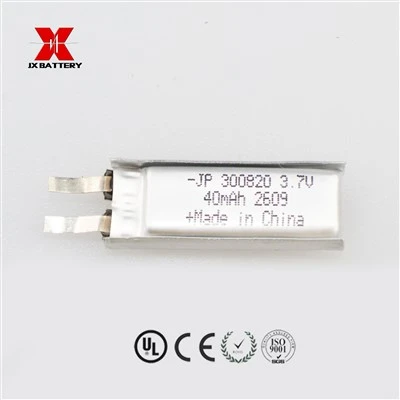
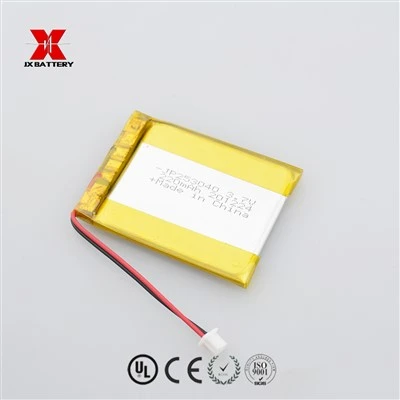
Size is the third number, and it is the one that couples the battery to the product design. A 3.7v lipo battery is specified by dimensions in millimeters, and the number on the label reads thickness, width, and length. A 502025 cell is 5.0mm thick, 20mm wide, and 25mm long. A 383079 cell is 3.8mm thick, 30mm wide, and 79mm long. The Chicago lock had a housing pocket cut for a 5mm cell, and the replacement options were locked to that thickness. The lesson is to set the battery size before the housing is final, because a thicker cell cannot be squeezed into a thinner pocket. When the product team sends the cavity dimensions, the 3.7v lipo battery options come down to a short list fast.
The protection circuit is not optional
A bare cell is a liability, and the protection circuit is what keeps the 3.7v lipo battery safe in a finished product. The protection module cuts charge at 4.2V, cuts discharge before the cell drops too low, and stops short circuit current. The Chicago batch shipped without it, the chargers pushed the cells past 4.2V, and the returns came back swollen. The fix was a cell with a built-in PCM and the charge profile set to the datasheet. I ask every client whether the battery carries protection before the sample order, because adding it later means a different cell, not a different firmware.
How I screen a 3.7v lipo battery supplier
I screen a 3.7v lipo battery supplier the way I screen any cell maker. I ask for the cycle life claim and the capacity tolerance on the datasheet. I ask whether the cells carry UN38.3, UL, and IEC certification, and I ask for the certificates, not the marketing page. I ask what happens to a cell that fails the 500 cycle test in month eight. I ask for the internal resistance spec, because high internal resistance means heat and sagging voltage. I ask for samples before the order, and I cycle the samples with the real charge profile for a week, not on the bench with a lab charger. A supplier who sends the datasheet, the certificates, and a working sample in one email is a supplier you can build a product on.
Quick answers on 3.7v lipo battery
How do I choose the mAh for my device? Measure the average current draw, multiply by the hours you need, and add 30 percent headroom. What does the C rating mean? It is the maximum safe discharge current as a multiple of capacity. What is a 502025 battery? It is a 5.0mm thick, 20mm wide, 25mm long lithium polymer cell. Do I need a protection circuit? Yes, a bare cell overcharges and over-discharges without one. How many cycles does a 3.7v lipo battery last? 300 to 500 cycles is the common range, and the datasheet should state the number at the right depth of discharge. Can the size be customized? Yes, pouch cells are built to the cavity dimensions, and the housing design should be set first.
Send us the device spec, get a 3.7v lipo battery quote that fits
A 3.7v lipo battery order works when the capacity, the discharge rate, and the size all match the device, and that starts with the details you send us. Tell us the average and peak current draw, the runtime target, and the cavity dimensions, and our engineers will recommend the capacity, the C rating, and the protection that fit the product. Our li polymer battery range covers custom pouch cells across the capacity and size range, and the custom 3.7V rechargeable models are built to the dimensions and connectors your device needs. Send your project details through our inquiry form, and we will quote the 3.7v lipo battery that matches your product instead of the one that matches your budget first.