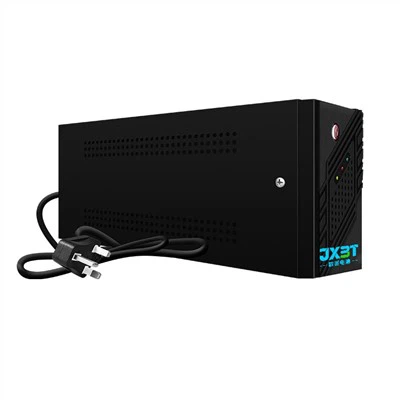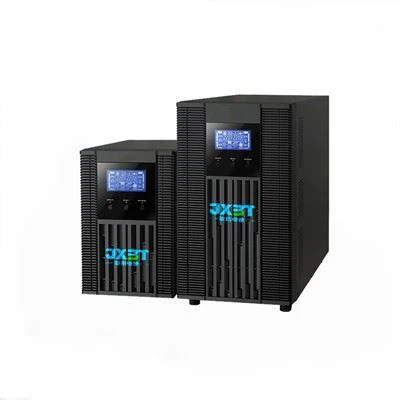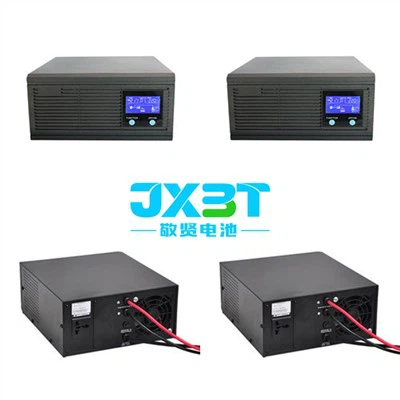

Hey there! As a supplier of UPS 1kva Offline units, I often get asked the question: "How long can a UPS 1kva Offline provide backup power?" Well, let's dig into this topic and find out.
First off, it's important to understand what a UPS 1kva Offline is. An Uninterruptible Power Supply (UPS) is a device that provides emergency power to a load when the input power source, typically the utility mains, fails. The "1kva" refers to the apparent power rating of the UPS, which is 1 kilovolt - ampere. The "Offline" type means that the UPS is in standby mode most of the time and only kicks in when there's a power outage.
The backup time of a UPS 1kva Offline depends on several factors. One of the most crucial factors is the load connected to the UPS. The load is the electrical equipment that's drawing power from the UPS. Different devices have different power consumption levels. For example, a small LED lamp might consume only a few watts, while a desktop computer with a monitor could consume around 200 - 300 watts.
Let's say you have a UPS 1kva Offline with a battery capacity of, for instance, 12V and 7Ah. To calculate the approximate backup time, we need to use some basic electrical formulas. First, we need to convert the kva rating to watts. In a resistive load, 1kva is equal to 1000 watts. But in real - world scenarios, the power factor (PF) comes into play. For a typical UPS, the power factor might be around 0.8. So, the actual power output in watts is 1000 * 0.8 = 800 watts.
The energy stored in the battery can be calculated using the formula E = V * Ah. For a 12V, 7Ah battery, the energy stored is 12 * 7 = 84 watt - hours.
Now, if we have a load of 100 watts connected to the UPS, the backup time (T) can be calculated using the formula T = E / P (where E is the energy stored in the battery and P is the power consumption of the load). So, T = 84 / 100 = 0.84 hours or about 50 minutes.
However, this is a very simplified calculation. In reality, there are other factors that can affect the backup time. One of these factors is the efficiency of the UPS. The UPS itself consumes some power during the conversion process from DC (from the battery) to AC (for the connected devices). A typical UPS efficiency might be around 85 - 90%. So, the actual available energy for the load is reduced.
Another factor is the age and condition of the battery. Over time, the battery's capacity decreases. If the battery is old or has been subjected to extreme temperatures, its ability to hold a charge will be reduced, which in turn shortens the backup time.

Let's talk about some common applications and the expected backup times. If you're using the UPS to power a few essential devices in your home, like a router and a small LED light, the load might be around 50 - 100 watts. In this case, with a decent - sized battery in a UPS 1kva Offline, you could get 1 - 2 hours of backup power.
For small office setups, if you're powering a desktop computer, a monitor, and a small printer, the load could be around 300 - 400 watts. With the same UPS and battery configuration, the backup time might be around 20 - 30 minutes.
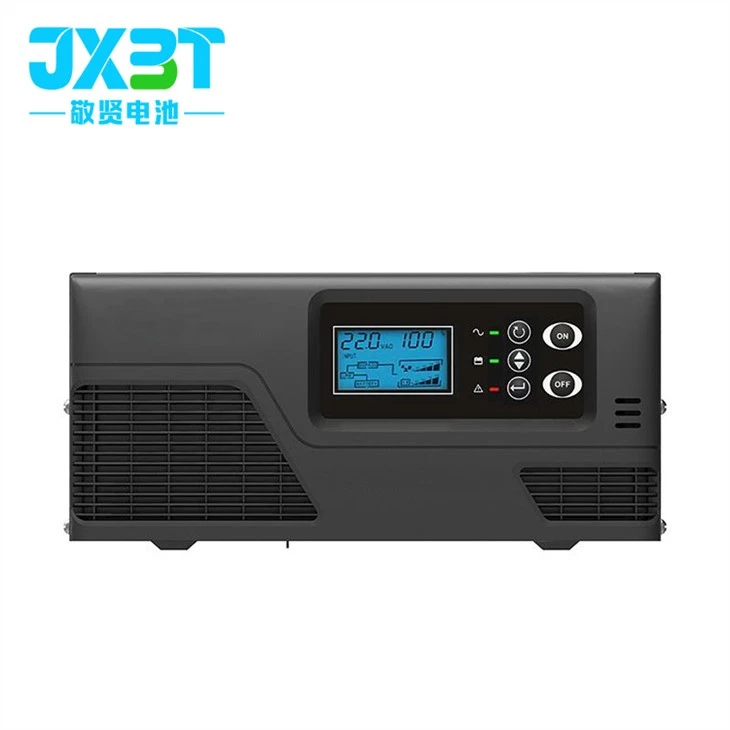
Now, if you're looking for more power and longer backup times, we also offer other types of UPS systems. Check out our UPS For Home Use options. These are specifically designed to meet the needs of households and can provide reliable backup power for various home appliances.
We also have Rack Mount Type UPS 1.5kw and UPS Rack Type 1.5kva units. These are great for data centers, server rooms, or larger office setups where more power and longer backup times are required.
So, how can you determine the right UPS for your needs? First, make a list of all the devices you want to power during a power outage. Check their power consumption ratings, which are usually listed on the device or in the user manual. Then, add up the power consumption of all these devices to get the total load. Based on this load, you can choose a UPS with an appropriate power rating and battery capacity to get the desired backup time.
If you're still not sure which UPS is right for you, don't hesitate to reach out. We're here to help you make the best decision for your power backup needs. Whether you're a homeowner looking for basic protection or a business owner in need of a reliable power solution, we have the expertise and the products to meet your requirements.
In conclusion, the backup time of a UPS 1kva Offline can vary widely depending on the load, battery capacity, UPS efficiency, and battery condition. By understanding these factors and choosing the right UPS for your needs, you can ensure that you have power when you need it most.
If you're interested in purchasing a UPS or have any questions about our products, feel free to contact us for a detailed discussion and a customized solution. We look forward to working with you to keep your power running smoothly.
References
- Electrical Engineering textbooks on power systems and UPS technology
- Manufacturer's specifications and datasheets for UPS 1kva Offline units