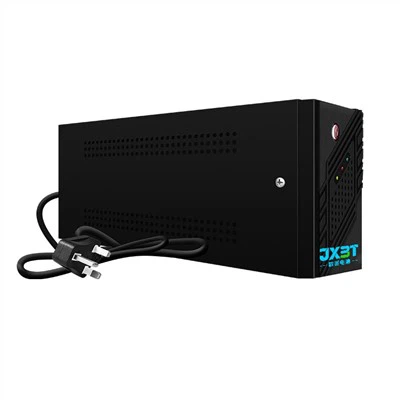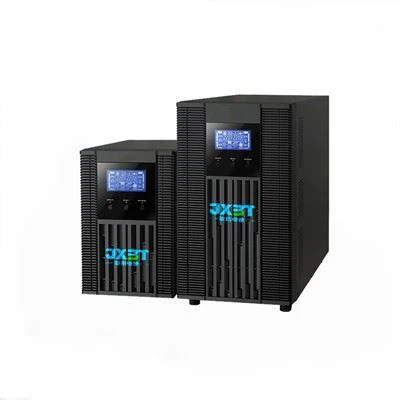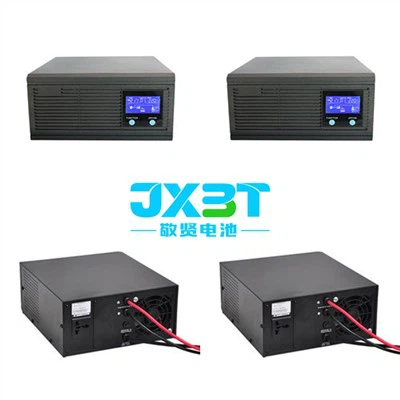

In the realm of power protection, Backup Uninterruptible Power Supplies (UPS) play a crucial role in safeguarding electronic devices from unexpected power disruptions. As a leading Backup UPS supplier, we often encounter inquiries about the differences between online and offline Backup UPS systems. Understanding these distinctions is essential for making informed decisions when selecting the right UPS solution for your specific needs.
How Online and Offline Backup UPS Work
Let's first delve into how these two types of UPS operate. An offline Backup UPS, also known as a standby UPS, remains in standby mode under normal power conditions. It continuously monitors the incoming power supply. When a power outage or a significant voltage fluctuation occurs, the offline UPS quickly switches from the utility power to its battery - powered inverter to provide electricity to the connected devices. This switching process typically takes a few milliseconds to a few tens of milliseconds.
On the other hand, an online Backup UPS, also called a double - conversion UPS, operates differently. It constantly converts the incoming AC power to DC power and then back to AC power. The connected devices are always powered by the inverter, which is supplied by the battery or the rectifier that converts the incoming AC. This means that the devices are isolated from any power disturbances in the utility power supply.
Power Protection Quality
One of the most significant differences between online and offline Backup UPS lies in the quality of power protection they offer.
Offline Backup UPS provides basic power protection. It is mainly designed to protect against complete power outages. While it can handle minor voltage sags and surges to some extent, its response time during a power event can be a drawback. For sensitive electronic equipment such as high - end servers, precision medical devices, or industrial control systems, the short interruption during the switch from utility power to battery power in an offline UPS may cause data loss, system crashes, or even damage to the equipment.
Online Backup UPS, however, offers superior power protection. Since the connected devices are always powered by the inverter, they are shielded from all types of power problems, including voltage sags, surges, frequency variations, and electrical noise. This makes online UPS ideal for critical applications where even the slightest power disruption can have severe consequences. For example, in a data center, an online UPS ensures that servers can continue to operate smoothly, preventing data corruption and downtime. You can explore our Online Industrial Long Backup UPS for high - end power protection solutions.
Efficiency
Efficiency is another key factor to consider when comparing online and offline Backup UPS.
Offline Backup UPS is generally more energy - efficient under normal power conditions. Since it remains in standby mode and only activates the inverter when there is a power problem, it consumes less power. This makes it a cost - effective choice for applications where power protection is needed but the equipment is not highly sensitive to power disturbances, such as home computers or small office equipment.


Online Backup UPS, due to its continuous double - conversion process, has a relatively lower efficiency. The conversion from AC to DC and then back to AC results in some power loss. However, modern online UPS models have made significant improvements in efficiency, and for critical applications, the benefits of superior power protection often outweigh the slightly higher energy consumption.
Battery Usage and Backup Time
Battery usage and backup time are also important aspects of the difference between these two types of UPS.
In an offline Backup UPS, the battery is only used during power outages. This means that the battery has less wear and tear under normal conditions, potentially extending its lifespan. Backup time in offline UPS can vary depending on the battery capacity and the load connected to the UPS. For small - scale applications, an offline UPS with a relatively small battery can provide enough backup time to shut down the equipment gracefully. You can check our Backup UPS Batteries for a range of battery options.
Online Backup UPS, on the other hand, continuously uses the battery (either directly or through the rectifier) to power the inverter. This can lead to more frequent charging and discharging cycles, which may slightly reduce the battery lifespan. However, online UPS systems are often designed with larger battery capacities to provide longer backup times, which is crucial for critical applications that require continuous operation during power outages. For example, a computer server room may require a Computer Server UPS Battery with a long - lasting and high - capacity battery.
Cost
Cost is a practical consideration for many customers.
Offline Backup UPS is generally more affordable in terms of upfront cost. It has a simpler design and fewer components compared to online UPS, which makes it a budget - friendly option for users with limited power protection requirements.
Online Backup UPS, with its advanced technology and superior performance, comes at a higher price. The cost includes not only the UPS unit itself but also the larger battery capacity and more complex circuitry. However, when considering the long - term costs associated with potential equipment damage, data loss, and business downtime, the investment in an online UPS can be well - worth it for critical applications.
Application Scenarios
The choice between online and offline Backup UPS also depends on the specific application scenarios.
Offline Backup UPS is suitable for home use, small offices, and non - critical equipment. For example, a home computer user can use an offline UPS to protect their computer from sudden power outages, allowing them to save their work and shut down the computer properly. Small office printers, routers, and other basic office equipment can also be protected by offline UPS.
Online Backup UPS is indispensable for data centers, hospitals, industrial automation systems, and other critical applications. In a data center, an online UPS ensures that servers can continue to run without interruption, protecting valuable data and maintaining business operations. In a hospital, medical equipment such as life - support systems and diagnostic machines require the highest level of power protection, which can only be provided by an online UPS.
Conclusion
In conclusion, the differences between online and offline Backup UPS are significant in terms of power protection quality, efficiency, battery usage, cost, and application scenarios. As a Backup UPS supplier, we understand that each customer has unique power protection needs. Whether you need a basic and cost - effective offline UPS for home or small - office use or a high - performance online UPS for critical applications, we have the right solution for you.
If you are interested in learning more about our Backup UPS products or need assistance in selecting the most suitable UPS for your requirements, please feel free to contact us for procurement and further discussions. We are committed to providing you with the best power protection solutions.
References
- "Uninterruptible Power Supplies (UPS): A Comprehensive Guide" by industry experts in power protection.
- Technical documents from leading UPS manufacturers.