

How Does a Battery Achieve Fast Charging?
Fast charging in batteries isn't just about material changes-it's a "trinity" of materials, structure, and intelligent control.

Does the battery's inherent performance support fast charging?
Among commercially available batteries, lithium-ion batteries currently support the fastest charging speeds. The performance ranking is as follows:
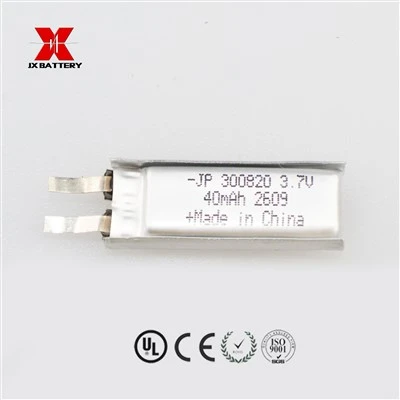
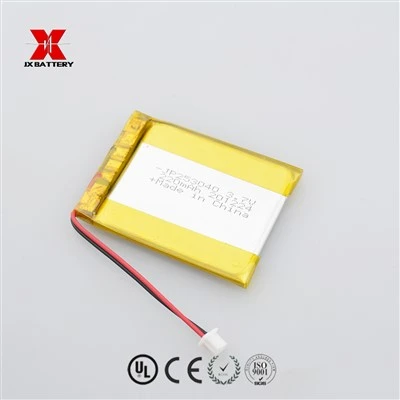
Soft-pack stacked polymer lithium batteries: Fastest charging capability
Soft-pack stacked lithium iron phosphate batteries: Second fastest
Cylindrical steel-case lithium batteries: Third fastest
Lead-acid batteries do not support fast charging...
1. Battery Process
Stacked electrode process: Manufactures battery cells by stacking positive/negative electrodes.
Advantages: Lower internal resistance, higher charge/discharge efficiency vs. other processes.
2. Battery Materials
Fast-charging batteries require optimized materials:
Categories: Ordinary, high-energy-density, and high-rate discharge types.
Key upgrades:Anode: Traditional graphite → Slow ion transfer.
Secondary granulation + surface coating → Boosts transmission efficiency ("fast-charging jacket").
Silicon-carbon anodes → 10x theoretical capacity vs. graphite.
Electrolyte: New formulations/additives → Reduce ion resistance.
Solid-state electrolytes → Enhance safety.
3. Is the Charger Functionality Sufficient for Fast Charging?
It is universally understood that chargers are used to replenish depleted batteries. For a battery to achieve fast charging, the charger must support fast-charging protocols (e.g., USB PD, QC) in addition to the battery's own capabilities. Without this protocol compatibility, the battery's fast-charging potential cannot be realized.
Systemic Principle of Fast Charging
Fast charging operates as an integrated solution requiring three essential components to work in unison:
Battery (designed for fast charging)
Battery Protection Board (BMS)
Protocol-Compatible Charger
If any one component lacks fast-charging capability, the entire system fails to deliver fast-charging performance.
Core Insight:
Fast charging is not a standalone feature-it demands perfect harmony between the battery, BMS, and charger. A single weak link disables the entire function.
Supplementary Note: Impact of Fast Charging on Battery Lifespan
Critical Warning:
Forcing fast charging on batteries not designed for it-such as by applying overvoltage or excessive current-will:
Severely compromise battery lifespan (accelerating electrochemical degradation);
Trigger safety hazards, including thermal runaway, fire, or explosion.
Key Insight:
Fast charging must only be used with explicitly compatible batteries to avoid irreversible damage and safety risks.
Need a battery safety protocol guide for fast-charging applications? Covers voltage/current thresholds and hazard prevention measures.

Globally renowned lithium polymer battery company-JXBT