

The first time I had to explain a lithium polymer aa cell to a client, he was holding a failed prototype that his previous factory had shipped without checking the voltage, and the smell of burnt board was still in the box. He ran an electronic shelf label business out of Ohio and had ordered what he thought was a rechargeable AA replacement for a circuit designed around 1.5V; what arrived was a raw 3.7V pouch cell stuffed into an AA shell, and it had taken out three of his test units before his engineer thought to measure the output. That conversation, and the invoice his factory never refunded, is the reason I start every lithium polymer aa inquiry by asking about the circuit first and the chemistry second.
What an AA lithium polymer battery actually is
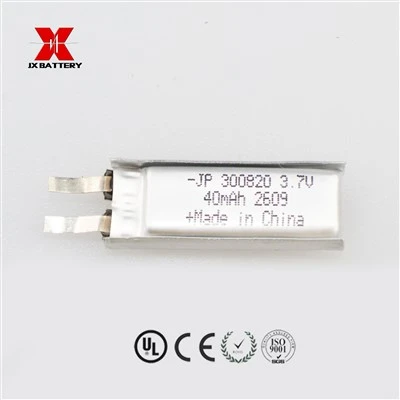
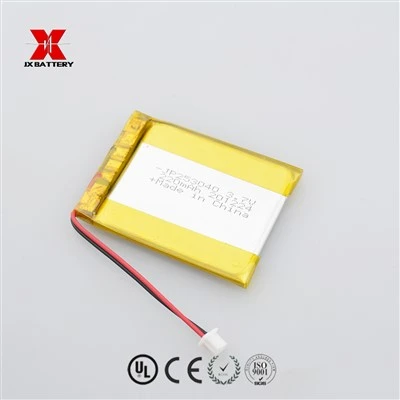
The name trips people up because it sounds like a cylindrical cell with polymer gel inside a steel can, and it is not. An AA lithium polymer aa cell is a soft-pouch lithium cell, the same construction family that powers modern phones, wrapped in foil laminate, fitted with a small protection board, and fitted into the standard fourteen by fifty millimeter AA envelope. Open the shell and you will find the pouch, a jelly roll or a flat stack of layers, and a circuit board that manages the cell, not a coil of chemistry in a metal tube. The electrochemistry sits at 3.7V nominal and charges to 4.2V, which is the whole problem in miniature: alkaline devices expect 1.5V, and a raw 3.7V cell presents more than double the voltage a 1.5V circuit can tolerate. So the honest market divides into two products. One is the plain 3.7V lithium polymer aa cell for equipment designed around lithium voltage from the start, such as modified flashlights and niche hobby electronics, where the designer accounted for the higher rail. The other is the regulated 1.5V variant, which embeds a tiny buck converter in the shell, holds the output at a steady 1.5V until the cell is nearly depleted, and reproduces the discharge behavior of the alkaline cell it replaces closely enough that even a low-battery indicator reads the same. Our QC department prints a single sentence on every work order that touches these cells: a lithium polymer aa cell is only as safe as the protection board inside it.
Why switch from alkaline
The purchasing decision usually comes down to numbers a finance person can defend, and the arithmetic favors the switch in a predictable way. A lithium polymer aa cell delivers five hundred to a thousand charge cycles before capacity settles at eighty percent of the original figure; an alkaline cell delivers one cycle, so a device that cycles weekly crosses the break-even point within the first three to five months even when the lithium cell commands several times the unit price. The polymer chemistry in a lithium polymer aa cell packs more usable energy into the same compartment, leaks only two to five percent of its charge per month in storage, and holds its output voltage flat through discharge, whereas an alkaline cell begins near 1.5V and sags continuously. I keep a logged example from our own Shenzhen office: one of our engineers installed a pair of our cells in the smoke detector above his desk in January, the alkaline pair before that had lasted him six months, and the lithium pair ran eighteen months and still measured above 3.2V when he swapped them out as a precaution. That log entry has settled more buyer arguments than any chart I have produced.
Where it does not fit
The advice that loses us orders deserves the same space as the pitch, because the wrong application can damage a customer's reputation as well as his product. A 3.7V cell will destroy a device designed for 1.5V, and no capacity figure changes that, so the regulated 1.5V lithium polymer aa is the only drop-in candidate for mainstream consumer gear; even that version carries constraints, because the protection board and the buck converter add mass and alter transient behavior, so a motorized product or anything that draws current spikes requires a discharge-rate evaluation before the first order. Lithium chemistry demands a charging circuit with a proper CC-CV profile, temperatures within the rated window, and respect for the protection board's cutoffs; overcharge, physical damage, or charging below freezing invites failure that no warranty covers. A single-use product that will sit on a shelf for two years should stay on alkaline, and I have told customers that plainly, more than once, and watched them take the advice; the orders those customers placed later, after the alkaline path proved itself right, are the ones I keep in the file.
The specs that matter
The printed label is the least reliable source of truth on a lithium polymer aa cell, and three figures matter more than the marketing copy. Capacity should be compared in watt-hours, because a plain 3.7V cell typically measures between four hundred and seven hundred milliamp-hours while a regulated 1.5V variant quotes a higher milliamp-hour figure that is measured at the stepped-down rail; discharge capability is the second figure, since a protection board rated for continuous current will open the circuit when the device peaks above it on a lithium polymer aa cell, and a cell designed for a remote control cannot feed a motor; the protection specification is the third, covering overcharge at 4.2V, over-discharge around three volts, overcurrent, and short circuit, together with the charging and operating temperature limits. Cycle life and certification close the review for any lithium polymer aa purchase: five hundred to a thousand cycles is the norm for these cells, and a supplier who ships them for transport should provide UN38.3, IEC 62133 safety documentation, and RoHS compliance on request.
How to source custom AA-size cells
A custom lithium polymer aa battery order follows a predictable OEM path once the buyer answers three questions: the voltage the circuit expects, the capacity the runtime requires, and the exact dimensions and terminal layout of the compartment. With those three answers, the factory evaluates the cell design and the protection board, and a sample with a measured discharge curve precedes any quantity commitment; the buyer should request the capacity report for that sample, the cycle test data, and the safety certificates, and should confirm the MOQ against the forecast, because a custom AA-size pack with a particular connector or a particular PCB is an engineering exercise rather than a catalog item. The suppliers that earn repeat business answer with printed reports and a schedule, and they state their limitations with the same clarity as their capabilities.
Start with the voltage your circuit expects
The summary that covers every lithium polymer aa conversation is short: the cell replaces alkaline only when the voltage matches the device, the protection board matches the load, and the supplier matches the application. Begin with the circuit, select 3.7V only where the design was built for that rail, select the regulated 1.5V version for everything else, and treat the sample as the decision point instead of the price sheet. At JXBT, Shenzhen Jingxian Battery Technology Co., Ltd, we have manufactured custom lithium polymer aa packs since 2017 for locks, wearables, medical devices, and portable electronics, with OEM and ODM support, samples within days, and 24-hour engineering response, so forward the compartment dimensions or the drawing to our lithium polymer battery page for a review, and request a quotation through our contact page with the discharge data included.