

What the 3mm to 5mm Range Actually Means for Ultra-Thin Phones
This thickness band generally maps to flagship-tier ultra-slim phones and some dual-SIM business-focused models where every fraction of a millimeter matters. A rough industry rule of thumb: under the same electrode formulation and stacking structure, every 0.5mm shaved off cell thickness typically costs 5% to 8% of capacity, depending on coating density and separator layer count. That's exactly why buyers who test both a 3mm and a 5mm sample from the same supplier often end up rethinking the trade-off between "thin" and "how long it actually lasts."
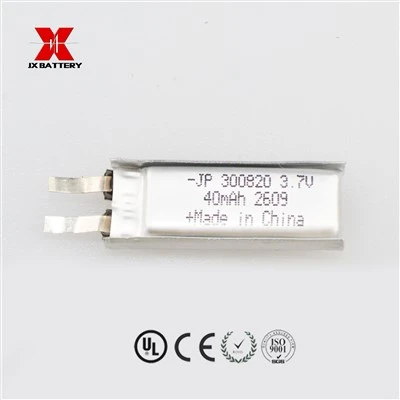
Lithium Polymer Batteries JP301324 90mah sits in a different niche - this smaller-capacity format usually shows up in secondary circuit modules or tightly squeezed cavity space near the phone's edge. It's not really a substitute for the 350mAh main-capacity format; the two serve different roles in the same device.
Why the Quoted Thickness and the Delivered Thickness Don't Always Match
This is the part buyers most often overlook during sampling. Two suppliers can quote the exact same nominal thickness and hand you two very different products, because the gap comes from the manufacturing process itself.
Lamination cell construction: Electrodes are stacked layer by layer, so thickness consistency mainly depends on how uniform each coated layer is. In theory this makes thinner cells easier to achieve, but it demands tighter coating-equipment precision.
Winding process: If winding tension isn't tightly controlled, the wound core can develop local bulging, which makes hitting a true 3mm target harder than with lamination.
Separator layer count and tab placement: Every extra separator layer adds to the cumulative thickness, and tabs placed mid-cell rather than at the top edge tend to create localized high spots.
Stack those three variables together, and you get the real explanation for why a cell labeled "3mm" can measure 3.1mm on one batch and 3.35mm on the next.
The table below is a common industry reference range for thickness tolerance, useful when confirming specs in writing with a supplier:
| Nominal Thickness | Typical Tolerance Range | Process Most Suited | Capacity Loss (vs. 5mm baseline) |
|---|---|---|---|
| 5.0mm | ±0.15mm | Lamination or winding | Baseline |
| 4.0mm | ±0.15–0.20mm | Mostly lamination | ~5–6% |
| 3.0mm | ±0.20–0.30mm | Lamination only, consistently | ~10–13% |
These figures vary by cell maker and coating-line precision, but they're a reasonable baseline for judging whether a supplier's promised tolerance is realistic - instead of taking a verbal "we can do 3mm" at face value.
How to Verify a Supplier Can Actually Hold That Thickness at Volume
Making one good 3mm sample in a lab isn't the hard part. The hard part is keeping thousands or tens of thousands of units consistent batch after batch. Before placing a bulk order, it's worth confirming a few things directly with the supplier:
Ask for recent batch-level inspection data on the same model, same thickness - not just a single sample report.
Get the tolerance range written into the purchase confirmation as a number (e.g. "±0.2mm"), not left as a verbal understanding.
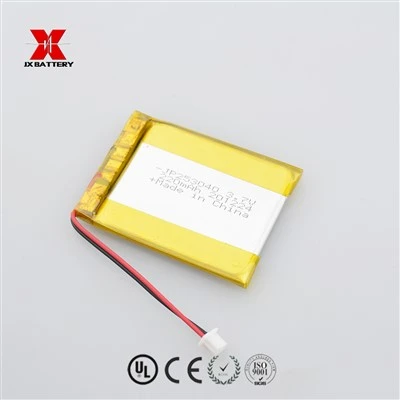
Confirm whether the quoted thickness for a Lithium Polymer Battery JP802025 350mah PCB Added cell already accounts for the PCB protection board once it's mounted - the board itself typically adds another 0.3 to 0.5mm, and this is one of the most commonly missed factors when buyers calculate final installed thickness.
If a supplier can only produce a single sample report and has no batch-level inspection data on file, that's usually a sign worth paying attention to before moving to a large order.
Three Things to Lock Down Before Placing a Bulk Order
Getting these three items confirmed in writing before the purchase order goes out tends to save a lot of rework later:
Written tolerance range: Nominal thickness plus the exact plus/minus range allowed.
PCB protection board mounting method: Surface-mounted versus embedded changes the final installed thickness.
Incoming inspection standard: Agree on the sample ratio per batch and the measurement points (commonly the four corners and the center of the cell).
It's also worth noting that cross-border e-commerce platforms and logistics carriers have tightened lithium battery shipping compliance requirements over the past couple of years, with more platforms now requiring UN38.3 test reports before listing or shipping is even allowed. For suppliers who've been running proper certification processes all along, this trend actually works in their favor - as regulatory scrutiny increases, the manufacturers with complete, up-to-date documentation are the ones who keep their shipping channels open, which is exactly why certification history is worth weighing during supplier selection.
F A Q
Q: How much capacity can a 3mm lithium polymer battery realistically hold?
A: It depends on the cell's length and width along with the electrode formulation, so there's no single fixed number. But at the same footprint, going from 5mm down to 3mm typically means accepting roughly a 10% capacity reduction - a physical trade-off buyers need to plan for upfront.
Q: Does a higher capacity at the same thickness mean lower safety margins?
A: Not necessarily. It comes down to whether the electrode energy density and the PCB protection board design are matched to each other. A more aggressive capacity target needs a protection board with correspondingly tighter overcurrent and overvoltage thresholds - the two need to be engineered together, not evaluated separately.
Q: How do I confirm a supplier's delivered batches will hold a consistent thickness?
A: The most direct way is to request recent batch-level inspection reports and put a written tolerance range into the purchase agreement. For higher-stakes orders, it's also common to request a small first batch, measure it independently, and only scale up once that batch passes.
Q: Can the JP802025 and JP301324 be customized to fit my exact chassis thickness?
A: Both are common baseline specs, and most suppliers can adjust dimensions within a reasonable range based on the internal cavity measurements a customer provides. Larger changes to electrode formulation or capacity usually require new tooling, which will affect lead time.
Q: Is a PCB protection board mandatory for an ultra-thin battery?
A: For anything going through formal retail channels or cross-border shipping, a PCB protection board is close to a baseline requirement - particularly for overdischarge and overcurrent protection, which directly affects both transport compliance and end-use safety.
Have Your Chassis Thickness Ready? Let's Check the Fit
If you already have a specific internal cavity dimension or thickness target in mind, send it over and we can confirm whether the JP802025 or JP301324 fits your build, and put together a Custom Lipo Battery Quote along with sample lead times