

Many customers equip their cameras with fast chargers, only to find the battery heating up noticeably, cycle life dropping faster than expected, or the protection board repeatedly cutting off charging. The issue is rarely whether the battery "can charge fast." It is usually that the battery's charge rate (C-rate) and protection board parameters were never properly matched to the fast-charging setup. Products labeled "fast-charge compatible" are common, yet few deliver stable, safe rapid top-ups in real camera use. This article focuses on the Lithium Polymer Battery JP802025 350mah PCB Added and breaks down the key decision points for true fast-charge compatibility, with a comparison to a smaller common size, so you can avoid costly mismatches.
What Fast Charging Actually Demands from a Digital Camera Battery
Camera usage differs sharply from phones or earbuds. Between shots, users often have only a few minutes-or less-to top up power. During long recording sessions the cell already runs warmer, and adding fast-charge current multiplies thermal stress. Many users report noticeable capacity loss after just a few cycles; this is frequently the result of sustained charging above the cell's design limits.
Charge rate (C-rate) is the foundation for understanding fast charging. Simply put, 1C is the current that fully charges the rated capacity in one hour; 2C does it in thirty minutes. For a 350 mAh cell, 1C equals roughly 0.35 A and 2C equals about 0.7 A. Data shows that continuous 2C charging places significantly higher stress on electrodes and electrolyte than 1C under the same cell chemistry-greater polarization and faster heat generation. A camera main battery operated near or above its design limit for extended periods often delivers only 60–70 % of its rated cycle life, or less. That is why "can charge fast" and "safe long-term fast charging" are two different things.
Why Batteries Labeled "Fast-Charge Compatible" Perform So Differently
Cell design is the first major divide. High-rate cells typically use thinner electrodes, higher conductive additive content, and optimized electrolytes to lower internal resistance and improve lithium-ion diffusion. Standard capacity-oriented cells, even with a protection board added, struggle to sustain currents above 1C–1.5C without pronounced temperature rise or accelerated degradation. Electrode thickness, compaction density, and separator porosity directly determine the practical upper limit for fast charging.
The second critical factor is the protection board. Whether the PCB Protection Board Charge Rate matches the charger's output current is often overlooked. Many boards ship with conservative over-current thresholds or charge-termination voltages and temperature cut-offs that do not align with fast-charge conditions. When the charger's current approaches or exceeds the board's limit, repeated cut-offs occur. Users experience intermittent charging that both frustrates and subjects the cell to repeated current spikes.
Three variables largely define the safe fast-charge boundary
Precise charge-termination voltage within the cell's allowed window (too high increases lithium plating risk).
Over-current protection threshold that leaves a reasonable margin above the target charge current.
Temperature protection trigger points that account for combined self-heating and ambient conditions in real use.
Any mismatch among these three turns a "fast-charge" claim into an empty label.
Choosing Between JP802025 and JP301324 for Fast-Charge Applications
Different capacities and form factors serve different roles in fast-charge scenarios. The comparison below clarifies typical positioning:
| Model | Nominal Capacity | Recommended Max Charge Rate (reference) | Typical Use Case |
|---|---|---|---|
| JP802025 | 350 mAh | 1C–1.5C (depending on cell chemistry and board) | Main camera battery or primary power module |
| JP301324 | 90 mAh | Around 1C | Small accessory modules, backup power, low-power sensors |
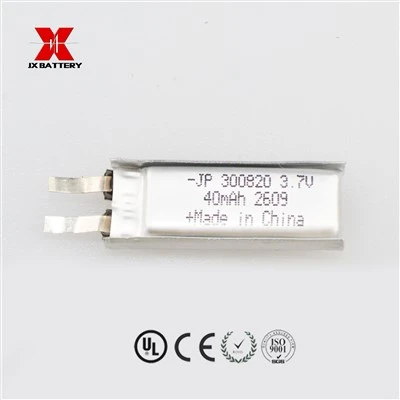
Lithium Polymer Batteries JP301324 90mah are better suited to small accessory modules rather than primary power. Their compact size and low capacity keep absolute current modest even at 1C, making thermal management easier. They work well for remote triggers, flash accessories, or lightweight backup packs. Forcing them into a main-battery role that demands sustained higher current yields poor runtime and limited fast-charge benefit.
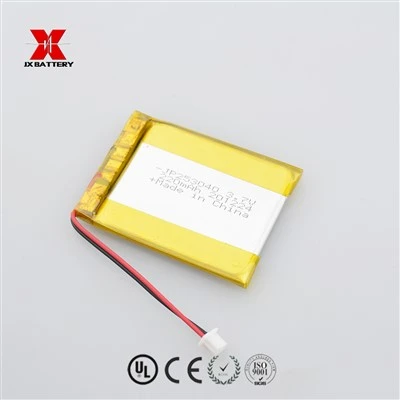
By contrast, the Lithium Polymer Battery JP802025 350mah PCB Added offers capacity closer to many portable digital-camera main batteries. With a properly matched protection board it can support relatively safe rapid top-ups in the 1C–1.5C range. The decisive factors remain whether the cell chemistry was optimized for higher rates and whether the board's over-current and temperature settings were calibrated to the target charger. Simply raising charge current without adjusting board parameters only produces frequent cut-offs.
This is also where the concept of a true Fast Charging Lithium Polymer Battery for Camera becomes practical: the combination of cell design, protection-board settings, and verified cycle data under the intended C-rate-not just a marketing claim.
Three Things to Confirm Before Customizing a Fast-Charge Battery
Before committing to a custom solution, lock down these three points in writing
Charger output parameters - voltage, maximum current, and whether constant-current/constant-voltage switching is supported. Measured curves are ideal.
Protection-board cut-off parameters confirmed in writing - over-charge voltage, over-current threshold, temperature protection points, and whether they can be fine-tuned for the actual scheme.
Cycle-life test data covering the fast-charge duty cycle - request attenuation curves at the target C-rate, not only standard 1C or laboratory conditions.
In recent years, cross-border platforms have tightened scrutiny of lithium-battery fast-charge safety standards and certification requirements. Suppliers that consistently perform compliance testing and can supply complete parameter and test documentation gain a clearer advantage-because they can deliver both speed and long-term reliability.
FAQ
Q: How fast can a lithium polymer battery safely charge?
A: It depends on cell design and protection-board settings. Most consumer-grade soft-pack cells are recommended for continuous charging no higher than 1C–1.5C. True high-rate cells can reach 2C or more, but only with matching chemistry and thermal design. Exceeding the design limit accelerates degradation.
Q: Does fast charging significantly shorten battery life?
A: When the C-rate is matched and heat is well managed, the impact remains controllable. Sustained over-rate charging or mismatched protection-board parameters can cut cycle life dramatically. Data often shows 2C continuous use producing 1.5–2 times (or more) the capacity fade of 1C operation.
Q: What happens if protection-board parameters do not match the fast charger?
A: The most common result is repeated over-current or over-temperature cut-offs that interrupt charging. In more serious cases voltage anomalies, excessive heating, or safety risks appear. The protection board is the final safety layer; its parameters must align with the charging scheme.
Q: Can the JP802025 and JP301324 have protection-board parameters customized to my charging setup?
A: Yes. Established manufacturers typically adjust over-current, over-charge, and temperature thresholds according to target charge current and termination voltage, and supply corresponding test data. The key is providing complete real-world operating conditions in advance.
Q: 5. Is battery heating during fast charging normal or a safety concern?
A: Mild temperature rise is expected, especially near design limits. Persistent surface temperatures above safe thresholds, swelling, or abnormal voltage behavior indicate a safety issue-stop use immediately and investigate
Does Your Camera Fast-Charge Setup Need a Matched Custom Battery
Claiming fast-charge support is not the same as delivering safe, matched fast charging. A reliable solution requires simultaneous attention to charge rate, protection-board parameters, and cycle-life data under the actual duty cycle. If you already have clear charger output specifications and usage details (main battery versus accessory, desired top-up time, operating temperature range), share them for a concrete compatibility assessment. As a focused Fast-Charge Lipo Battery Manufacturer, we prioritize long-term stability and documented compliance testing over simply advertising higher charge currents. When you are ready for a matched evaluation, send the parameters-we will respond with a practical recommendation.